
The postwar legacy of President Dwight D. Eisenhower is often wrapped in warm nostalgia, but several compelling accounts offer a far darker view of his role in history.
According to works by respected historians and authors, Eisenhower’s wartime and postwar actions raise serious moral questions—many of which remain unaddressed in mainstream narratives.
From the mass death of German POWs to suspicions surrounding General George Patton’s mysterious death, the evidence paints a disturbing picture.
These issues, combined with the sidelining of outspoken figures like Ambassador Joseph P. Kennedy, suggest a deeply manipulated version of World War II history that continues to shape public perception.
Eisenhower’s Hidden Role in the Deaths of German POWs
While many view Eisenhower as a kindly, if aloof, American hero, one book casts a much darker shadow over his legacy.
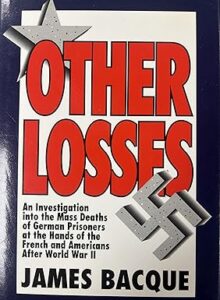
Other Losses by James Bacque, published in 1989 by MacDonald & Company, offers a deeply unsettling account.
According to Bacque, Eisenhower made deliberate decisions after World War II that led to the deaths of as many as four million German prisoners of war.
These deaths occurred during the Allied occupation, in the war’s aftermath, under conditions Bacque describes as entirely avoidable.
This explosive book challenges the long-standing image of Eisenhower.
Instead of the genial ex-military figure remembered by many, Bacque presents him as a calculating leader whose choices had deadly consequences.
Other Losses remains essential reading for anyone interested in post-war justice and historical truth.
Explore World War II: The Unnecessary War That Reshaped the World to uncover the hidden forces and political deals that turned a preventable conflict into a global catastrophe.
The Conflict Between Patton and Eisenhower
General George S. Patton is often remembered through the powerful film portrayal by George C. Scott.
But Patton’s real views—and his conflicts with top Allied leaders—are far more complex and troubling than Hollywood suggests.
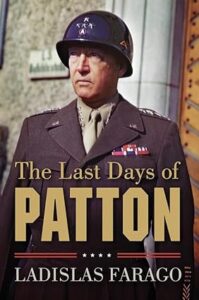
Ladislas Farago’s The Last Days of Patton (McGraw Hill, 1981) dives deep into this conflict.
Farago reveals that Patton strongly opposed the harsh treatment of defeated German forces.
His criticism extended to the very top, including Eisenhower himself.
Patton’s disdain was not subtle.
He clashed openly with Allied leaders and questioned the motivations behind their policies.
According to Farago, these tensions made Patton a target.
Powerful figures feared his popularity and the political power he could gain after the war.
The book makes it clear: Patton was isolated, distrusted, and, ultimately, silenced.
Was General Patton Assassinated?
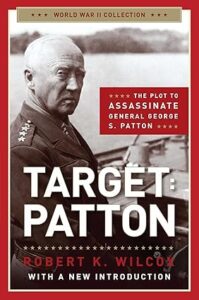
A more recent book, Target: Patton: The Plot to Assassinate General George S. Patton by Robert K. Wilcox (Regnery, 2008), builds on this chilling theory.
Wilcox provides strong evidence that Patton’s death may not have been accidental at all.
Instead, the general may have been the victim of an elaborate and deadly plot.
The theory is not new to longtime readers of The Spotlight.
In fact, the paper once published a firsthand interview with Douglas Bazata, a former OSS operative.
Bazata claimed that OSS Chief William Donovan had recruited him to assassinate Patton.
Though Bazata said he backed out and warned Patton, Wilcox later reported that Bazata eventually admitted he had gone through with the job.
Wilcox argues that the initial attempt on Patton’s life—a staged car crash—failed.
Patton, severely injured but still alive, was then killed in his hospital bed.
While mainstream sources scoffed at these claims, Wilcox builds a compelling case using military records and insider testimony.
Joseph P. Kennedy: The Silenced Anti-War Voice
No discussion of World War II dissent would be complete without acknowledging Joseph P. Kennedy.
As U.S. Ambassador to the United Kingdom, Kennedy stood firmly against the drive for American involvement in the European conflict.
His views clashed with the Roosevelt administration and the pro-war establishment.
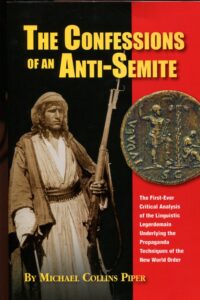
Michael Collins Piper examined Kennedy’s outspoken opposition in two books: The Confessions of an Anti-Semite and The Judas Goats: The Enemy Within.
Both books explore Kennedy’s legacy and the campaign to smear him in the media.
Despite being the patriarch of one of America’s most influential families, Kennedy was sidelined and portrayed as a villain for his views.
Kennedy’s story, often buried or distorted, deserves reexamination.
His warnings about foreign entanglements and elite manipulation remain relevant today.
Rewriting the Legacy of a Manufactured History
The deeper one looks into the postwar period, the more the official narratives begin to unravel.
Dwight D. Eisenhower, often celebrated as a calm and steady leader, appears in a very different light when viewed through the lens of lesser-known but thoroughly researched accounts.
From the devastating treatment of German POWs to the suspicious death of General Patton—and the silencing of dissenters like Joseph P. Kennedy—the evidence points to a version of history shaped by power, not truth.
What emerges is not simply an alternative interpretation, but a direct challenge to the story Americans have been taught for generations.
These hidden histories demand serious attention.
By revisiting the suppressed voices and censored facts of the mid-20th century, we gain not only a more honest understanding of the past, but a clearer vision of the forces that still shape our world today.