
Carl Menger, founder of the Austrian school of economics and the father of marginal analysis, studied how people make choices in real markets.
From this, he discovered the main trait that allows a good to become money on its own, without force or regulation.
He called this trait salability.
A good is more salable when you can sell it easily, at any time, and with little or no loss in price.
Salability: The Hidden Law Behind All Money
The more salable a good is, the more likely people are to accept it in trade.
Menger explained this idea in his classic essay On the Origins of Money.
This insight lays the groundwork for why certain goods rise to become money and why others never do.

Anything Can Become Money—But Every Choice Has Consequences
There is no rule that says what can or cannot be used as money.
The moment someone buys a good—not to use it, but to trade it later—they are treating that good as money.
Because people differ in taste and judgment, their choices of what counts as money also differ.
Across human history, almost anything has been used as money.
Gold and silver are the most famous examples.
But people have also used copper, seashells, huge stones, salt, cattle, government paper, precious gems, alcohol, and even cigarettes in harsh environments.
Subjective Value, Real-World Consequences
Each choice reflects the needs and values of the people using it.
There is no single “correct” form of money, because value is always subjective.
Yet every choice carries consequences.
Some forms of money work better than others, and some fail over time because they don’t hold value well or can’t be traded easily.

The Three Ways to Measure Scalability
We can compare different types of money by looking at how well they solve the three problems of barter: scale, space, and time.
These three traits show us how salable a good really is.
1.) Salability across scales
This means you can break a good into small pieces or combine it into larger amounts without losing value.
This lets someone sell exactly the amount they want.
2.) Salability across space
This means the goods are easy to transport.
People have always preferred money that holds a lot of value in a small, lightweight form.
That is why portable goods with high value density often become money.
Many goods can meet these first two requirements.
Metals, gems, and various commodities can be divided and moved around without too much trouble.
3.) salability across time—is the most important
A good must hold its value over long periods.
It must resist decay, spoilage, or deterioration.
If it cannot store value reliably, people will avoid holding it as money.
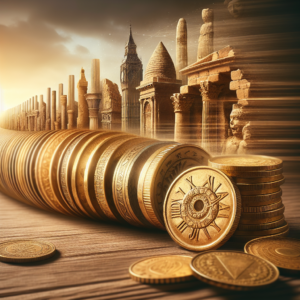
Why Salability Across Time Matters Most
Salability across time is a good’s ability to hold its value into the future.
This is what makes money useful as a store of value, the second major function of money.
For something to store value well, it must resist rot, decay, corrosion, and other forms of physical breakdown.
Anyone who tried saving their wealth in fish, apples, or oranges learned that lesson the hard way.
Those goods disappear long before the wealth can be used.
But physical durability alone is not enough.
Durability Isn’t Enough—Real Money Must Resist Dilution
A good can stay perfectly intact and still lose much of its value.
This can happen when supply increases too easily or when demand collapses.
So while physical integrity is required, it is only the first step.
True salability across time means the good must also protect its value, not just its physical form.
Bitcoin is designed to excel in this area.
Its fixed supply and digital nature allow people to store value without worrying about decay or uncontrolled production.

Hard Money vs. Easy Money: Why Supply Matters
For a good to hold its value over time, its supply must stay limited.
If new units can be produced easily and in large amounts, the value of each existing unit will drop.
This is why, throughout history, successful forms of money always had some built-in way to slow or restrict new production.
When people can’t create more units freely, the stored value stays protected.
Hard Money Protects You—Easy Money Robs You
This idea leads to the concept of hardness.
-
Hard money is money that is difficult to produce. Its supply grows slowly, which helps it keep its value.
-
Easy money is the opposite. Its supply can expand quickly, making it vulnerable to devaluation.
Understanding hardness explains why some forms of money survive for centuries while others fail.
It’s also why Bitcoin’s fixed supply of 21 million coins makes it one of the hardest forms of money ever created.
For those who care about sovereignty, not just price, this [rebel’s approach to buying Bitcoin] focuses on control and self-custody.
Stock-to-Flow: The Key Measure of Hard Money
To understand how hard a form of money is, we look at two simple numbers:
-
Stock – the total existing supply of a good. This includes everything produced in the past, minus anything consumed or destroyed.
-
Flow – the amount of new production expected in the next period of time.
The relationship between these two numbers—the stock-to-flow ratio—shows how well a good can serve as money.
You Can’t Save in What Can Be Printed Forever
If a good has a low stock-to-flow ratio, its supply can grow very quickly.
That means people could flood the market with new units if they started treating it as a store of value.
Because of that, it would not hold value well.
But when a good has a high stock-to-flow ratio, the opposite happens.
The existing supply is large compared to the amount of new production.
That makes it much harder for anyone to increase the total supply.
As a result, the good is more likely to keep its value over long periods.

Gold Was Great—Bitcoin Is Harder
This is the cornerstone of salability across time, and it’s the reason certain goods—like gold—became reliable forms of money for centuries.
Economist Antal Fekete discussed this dynamic in his work Whither Gold?, which explores how stock-to-flow shapes monetary strength.
Bitcoin takes this concept even further with a fixed supply and a predictable flow, making its stock-to-flow ratio one of the highest in history.

Why Hard Money Protects Savers and Easy Money Destroys Them
When people choose hard money—a good with a high stock-to-flow ratio—they naturally increase its demand.
As more people buy it to store their wealth, its price rises.
This rise encourages producers to make more of it.
But because the flow is small compared to the total stock, even a big jump in new production does very little to push the price down.
The supply simply can’t expand fast enough to harm savers.
This keeps the money strong over time.
Easy Money Dilutes You—Bitcoin Doesn’t
Easy money works the opposite way.
If a good has a low stock-to-flow ratio, producers can flood the market with new units the moment people try to save in it.
This surge in supply can crush the price.
When that happens, savers lose value, their stored wealth is devalued, and the good stops working as a reliable store of value.
This destroys its salability across time and punishes anyone who trusted it.
Bitcoin is engineered to prevent this problem.
With its fixed supply and predictable issuance, no one can dilute your savings by creating more.

The Easy Money Trap—and Why It Always Fails
This dynamic leads to what I like to call the easy money trap.
Whenever people use a good as a store of value, its supply will rise.
And if that supply can rise easily, it will wipe out the wealth of anyone who tried to save in it.
Producers will create more and more of it, and savers will pay the price as their stored value collapses.
The flip side is just as important: anything that successfully becomes money must have some natural or artificial limit on new production.
Without this restraint, the money cannot hold value over time.
If It’s Easy to Make, It’s Easy to Destroy Your Savings
Whether it is physical scarcity, difficult extraction, or strict rules, there must be a barrier that keeps the flow small compared to the total stock.
For a good to take on a monetary role, it must be costly to produce.
If it is easy or cheap to create, people will rush to make more and more of it.
This destroys the wealth of savers and removes any reason for people to hold that good as money in the future.
Bitcoin was built specifically to avoid the easy money trap.
Its supply is fixed, its issuance slows predictably, and no one can cheat the system by creating coins out of thin air.
Bitcoin: Escaping the Easy Money Trap for Good
Throughout history, people have always searched for a reliable way to store value.
This search led societies to discover a simple truth: easy money destroys savers, while hard money protects them.
Goods with low stock-to-flow ratios are endlessly diluted, crushing the wealth of anyone who trusted them.
But scarce, costly-to-produce goods rise above the easy money trap and become real money—money that lasts.

Why Hard Money Wins—and Bitcoin Sets a New Standard
Carl Menger’s insights and centuries of human experience show that money must be salable across time, space, and scale.
Most importantly, it must be resistant to uncontrolled supply growth.
This is why gold thrived for thousands of years, and why weaker forms of money disappeared.
Today, Bitcoin takes these principles and pushes them into the digital age with perfect scarcity and predictable issuance.

Break From the System With the Hardest Money on Earth
Bitcoin is engineered to be the hardest money ever created.
It is designed to protect savers, resist dilution, and escape the failures of every easy-money system before it.
For anyone seeking independence from inflationary currencies and broken financial systems, Bitcoin offers a real alternative.
If you want to start stacking Bitcoin and join the growing number of people choosing hard money, you can get $10 in free Bitcoin and I’ll receive $10 as well, which helps me keep creating content that challenges the system.