
Bitcoin gives you something rare in the modern world. Real ownership.
But ownership only matters if you store it correctly.
That’s where most newcomers get tripped up.
They hear the words hot wallet and cold wallet and assume one is “good” and the other is “bad.”
That’s the wrong way to think about it. The truth is simpler—and more practical.
You don’t choose one wallet. You choose a system.
And every rebel needs the right holster for the job.
What a Bitcoin Wallet Actually Does
Let’s clear the confusion first.
A Bitcoin wallet does not hold Bitcoin. It never has.
Your Bitcoin lives on the blockchain. Always.
Keys Define Ownership
A wallet only holds keys.
Those keys prove ownership and allow you to move your coins.
If you understand that, everything else falls into place.
This is why the phrase exists:
“Not your keys, not your crypto.“
If you’re brand new and want a simple, no-nonsense walkthrough, this Rebel’s Guide to Buying Bitcoin breaks down everything step by step.
Hot Wallets Explained (Fast, Flexible, Exposed)
A hot wallet is connected to the internet. That’s the entire definition.
Because it’s online, it’s fast. And because it’s fast, it’s convenient.
Hot wallets are usually apps on your phone or computer.
They are built for daily use. Think spending money, not life savings.
Common Hot Wallet Examples
Popular Bitcoin hot wallets include:
-
Phoenix (Lightning-focused)
-
Blockstream Green
-
Mobile wallets with QR scanning
-
Desktop wallets for quick access
These wallets shine when speed matters.
- Coffee.
- Donations.
- Small transfers.
But convenience comes with a tradeoff.
The Real Risk of Hot Wallets
Hot wallets are exposed. They touch the internet.
Your phone touches the internet. Your computer touches the internet.
That creates attack surfaces: Malware, Phishing, Fake apps, and Clipboard hijackers.
None of this means hot wallets are “unsafe.” It means they must be used correctly.
The Pocket Rule
Here’s the rule rebels follow:
Only keep in a hot wallet what you’d carry in your physical pocket.
If losing it would ruin you, it doesn’t belong there.
Cold Wallets Explained (Slow, Solid, Sovereign)
Cold wallets stay offline.
- No internet
- No background apps
- No silent connections
That’s the point.
Secure Storage, Not Speed
A cold wallet is built to protect value, not move it quickly.
These are usually hardware devices.
You plug them in only when you need to sign a transaction.
Then they go back into hiding.
Why Cold Wallets Exist at All
Cold wallets solve one problem better than anything else.
They protect your private keys from the digital world.
Even if your computer is compromised, your Bitcoin stays safe.
As long as:
-
Your recovery words are secure
-
You didn’t expose them
-
You didn’t photograph them
-
You didn’t store them online
Cold wallets protect against hackers. They do not protect against carelessness.
Cold Wallets Are for Savings, Not Spending
Cold wallets are ideal for:
-
Long-term holding
-
Life savings
-
Multi-year conviction
-
Large balances
They are not built for convenience. That’s a feature, not a flaw.
The friction protects you from panic, impulse, and mistakes.

What Rebels Should Look for in a Cold Wallet
When you pick a cold wallet, you’re not choosing a gadget — you’re choosing the vault that guards your financial independence.
Rebels don’t trust cloud features, wireless radios, or anything that tries too hard to be “convenient,” because convenience is where attackers get in.
That’s why serious Bitcoin holders avoid Bluetooth devices, closed systems, and wallets that support a thousand useless tokens.
Fortress for Your Future
For long-term savings, a Bitcoin-only, offline, wired, no-nonsense wallet is the safest path.
Your cold wallet should protect you from hackers, governments, exchanges, and even your own mistakes.
The wallets below were chosen because they respect that mission.
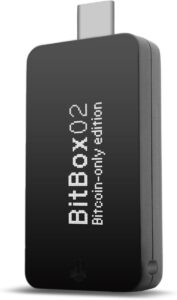
BitBox02: Simple, Secure, and Built for Bitcoin Maxis
The BitBox02 Bitcoin-only edition is perfect for beginners and serious stackers who want strong security without complicated setups.
It uses Swiss-engineered hardware, touch sensors, USB-C, and no Bluetooth—meaning fewer attack surfaces and less nonsense.
If you want a cold wallet that “just works” while keeping your keys off the grid, BitBox02 is a safe bet.
Coldcard MK4: The Cypher Rebel’s Weapon of Choice
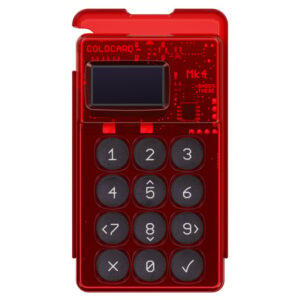
If you want the wallet that hardcore Bitcoiners use, you choose Coldcard MK4.
It’s built like a digital bunker—air-gapped, tamper-resistant, PIN-protected, and loaded with advanced security features.
Coldcard is for rebels who want maximum control and aren’t afraid of a little complexity to get it.
This is the wallet for people who treat their Bitcoin like treasure… because it is.
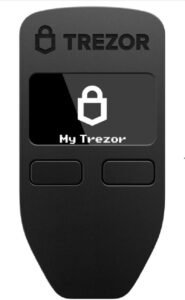
Trezor Model One: The Veteran Trusted by Millions
The Trezor Model One is one of the most battle-tested cold wallets ever made.
It’s beginner-friendly, easy to navigate, and supported by a massive global community.
If you want a wallet with a long reputation for reliability—and a smoother learning curve—Trezor delivers.
It’s a great middle-ground option between ease and security.
Do You Really Need Both?
Yes.
And this is where most guides fail.
Hot wallets and cold wallets are not competitors. They are teammates.
- Hot wallet = checking account
- Cold wallet = vault
One moves. One protects.
Rebels don’t gamble with their future just to save a few seconds.

Custodial vs. Non-Custodial (The Hidden Trap)
Now we need to draw a hard line.
Some wallets give you keys. Some don’t.
Custodial Wallets (Exchanges)
These are not real wallets. They are accounts.
Examples include:
You can click any of the above to earn a signup reward — they are affiliate links that help this rebel keep fighting the system.
You log in with:
-
Email
-
Password
-
2FA
But the company holds the keys.
You don’t own Bitcoin here. You own a promise. Promises can be revoked.
Why Exchanges Are Still Useful
Exchanges are on-ramps.
They turn dollars into Bitcoin. That matters.
One of the cleanest ways to start stacking is Swan Bitcoin.
- It focuses only on Bitcoin
- No distractions
- No casino tokens
If you want to start slow and steady, you can get $10 in free Bitcoin through my Swan link:
👉 https://www.swanbitcoin.com/Bayou/
That helps you start—and helps me keep pushing back against broken money systems.
But once you buy, the next step matters more than the buy.
Self-Custody Is the Rebel Line in the Sand
When your Bitcoin stays on an exchange:
-
They hold the keys
-
You hold permission
Accounts can be frozen. Withdrawals can be paused. Rules can change overnight. History proves this.
True ownership begins when you withdraw to your own wallet.
That’s when Bitcoin becomes sovereign money.
Private Keys and Recovery Phrases (The Point of No Return)
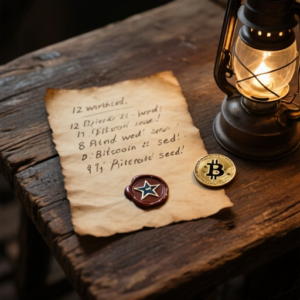
A private key is a massive number. No human memorizes it.
So wallets convert it into 12 or 24 words.
Those words are your wallet.
Not a backup. Not a copy. They are the keys.
Irreversible Loss
If you lose them, there is no reset. No support desk. No recovery email.
The blockchain does not care why.
Hot Wallet Security Basics
If you use a hot wallet:
-
Lock your phone
-
Avoid sketchy apps
-
Never share seed words
-
Keep balances small
-
Use Lightning for spending
Treat it like cash, fast useful and replaceable.
Cold Wallet Security Basics
If you use a cold wallet:
-
Write seed words offline
-
Store them in multiple secure locations
-
Never type them into a computer
-
Never upload them to the cloud
-
Never photograph them
Your discipline is your defense.
Lightning Changes How Hot Wallets Are Used
Lightning wallets like Phoenix add speed.
They make Bitcoin usable in daily life. Lower fees. Instant payments.
That’s powerful. But Lightning wallets should still follow the pocket rule.
They are spending tools, not vaults.
Are Hardware Wallets Safe Long Term?
Yes—when used properly.
The risk is not the device. The risk is human behavior.
Most losses come from:
-
Phishing
-
Fake updates
-
Seed exposure
-
Poor backups
Technology can’t fix carelessness. But it can reward discipline.
Final Framework: The Rebel Setup
Here’s the simple system rebels use:
-
Exchange → buy Bitcoin
-
Hot wallet → spend Bitcoin
-
Cold wallet → protect Bitcoin
Each has a role. Each has limits. Together, they create real sovereignty.
Final Thoughts: Choose Tools, Not Comfort
Bitcoin removes safety nets. That’s the point.
It replaces trust in institutions with responsibility.
Hot wallets give freedom of movement. Cold wallets give freedom over time.
If you want convenience, banks exist. If you want ownership, learn custody.
Choose your holster wisely.