
As human technology advanced, our ability to produce goods improved.
Metal production also grew, and many metals began to appear in large enough quantities to become useful as money.
These metals were valuable, dense, and easy to move.
That made them more practical than salt or cattle, especially when people needed to trade across long distances.
At the same time, producing metals was not easy in the early stages of civilization.
Increasing their supply took time and effort.
This difficulty protected their scarcity and gave them strong salability across time.

Why Metals Became Strong Early Forms of Money
Metals were dense, portable, and valuable.
This gave them an advantage over earlier forms of money.
Because they were hard to produce quickly, their supply stayed stable.
That stability made them trustworthy stores of value.
Timeless Value: How Precious Metals Outlasted Civilizations
Some metals held more value than others because of their durability and physical traits.
Iron and copper were common in the earth. They also corroded easily.
As societies produced more of them, new supply grew faster than existing stockpiles.
This rapid growth destroyed their ability to hold value. These metals became useful only for smaller, everyday transactions.
Corrosion Resistance: The Key to Long-Term Value Storage
Rarer metals such as silver and gold behaved differently.
They were far more durable. They resisted corrosion and decay.
Because of this, they held value across long stretches of time and became better stores of wealth.
Gold stood out above them all. It was virtually indestructible.
This gave people the ability to save wealth not just for years, but for generations.
In turn, it helped societies develop longer time horizons and more stable economic planning.
Why Scarcity and Durability Made Gold and Silver Superior
Silver and gold offered something iron and copper could not: lasting value.
Their scarcity protected their stock-to-flow ratio.
Their durability protected stored wealth.
And their resistance to corrosion made them dependable over centuries.
Gold, Silver, Copper: The Triad That Built Civilizations
At first, people traded metals by weight.
Every transaction required weighing, checking purity, and assessing the metal.
As metallurgy advanced, this changed. People learned how to mint metals into uniform coins.
These coins carried stamped weights and markings, which made them far easier to trade.
They also saved buyers and sellers from weighing the metal every time.
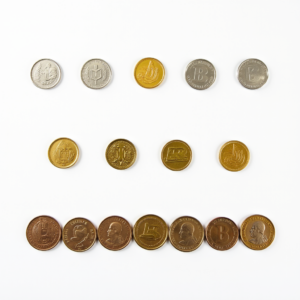
The main metals used for coins were gold, silver, and copper.
Together they served as money for nearly 2,500 years.
This system stretched from the time of King Croesus—the first ruler known to have minted gold coins—until the early twentieth century.
The Hierarchy of Hard Money: Gold, Silver, and Bronze in Action
Gold coins were the best store of value.
They held wealth across generations.
They were also the most salable across space because a tiny amount carried a large amount of value.
Silver coins offered a different advantage.
Because they had lower value per weight, they were ideal for smaller or everyday transactions.
Bronze coins filled the lowest tier of exchange.

Why Coinage Transformed Trade and Specialization
Uniform coins made markets larger. Prices became easier to measure. Trade expanded. Specialization increased.
But even this strong monetary system had two major flaws.
The first flaw came from using several metals at once.
Gold, silver, and copper did not maintain stable ratios.
Supply and demand shifted over the centuries.
Silver, in particular, often lost value when new production increased or demand declined.
This created uncertainty for anyone saving in silver.
Counterfeiters and Kings: The Twin Enemies of Sound Money
The second flaw was far more damaging.
Both governments and counterfeiters could reduce the metal content in the coins.
When they removed even a small amount of metal, they silently transferred purchasing power to themselves.
Over time, this debasement weakened the purity and soundness of the money.
For readers who want a deeper look at how early money systems evolved, this is an ideal place to reference Nick Szabo’s influential work, Shelling Out: The Origins of Money(2002).
How Centralization Turned Gold Into Easy Money
As the nineteenth century began, banking technology improved. Communication improved too.
These two changes made it possible for people to use paper money and checks backed by gold stored in bank vaults.
Now gold could move through the financial system without the physical metal needing to travel.
This made gold-backed transactions work at every scale.
Because of this, silver was no longer needed as money.

The Golden Unifier: A Global Standard for Trade
With gold carrying all the main monetary properties, the gold standard emerged.
It unified much of the world under one sound, market-based form of money.
This helped fuel global trade and allowed capital to grow at levels never seen before.
Supply Deception: Money Printing in a Gold Wrap
But the gold standard also had a fatal weakness.
Gold ended up centralized in the vaults of banks and, later, central banks.
Once that happened, banks and governments could issue more money than the gold they held.
That meant the supply of money could grow faster than the supply of gold.
Each time this happened, the money lost value.
Wealth was silently transferred away from savers and toward the institutions issuing the excess money.
The Fatal Flaw: Trust Betrayed by Banks and Governments
Centralizing gold made the system fragile.
It gave governments and banks power over the money supply.
And once they could expand that supply beyond the gold backing it, the hardness of the money began to fade.

Why Hard Money Always Wins
The history of money is a history of hardness.
Every monetary system that survived did so because its supply remained difficult to expand.
Metals replaced beads and shells. Gold replaced mixed-metal systems.
And the gold standard itself collapsed when governments learned they could inflate beyond their reserves.
The same pattern repeats in every era.
When money becomes easy to create, its users lose wealth.
When money stays scarce, people can save, plan, and build for the future.
Digital Gold, Perfected: Restoring Ancient Soundness with Modern Tech
This history leads directly to Bitcoin.
It is the first form of money designed so that its hardness cannot be weakened by governments, banks, or industrial advances.
Its supply is fixed. Its rules cannot be changed by political pressure.
And it restores the monetary stability that earlier civilizations tried to preserve through gold.
If you want to begin exploring hard money for yourself, you can start with $10 in free Bitcoin
This supports your journey into honest money—and helps me keep creating content that challenges the modern financial system.

If you’re tired of guesswork and want a clear entry point, this [step-by-step Bitcoin buying guide] cuts through the noise.
Final Thoughts: What Gold Taught Us About Bitcoin
Gold taught the world that value must be protected from inflation.
Bitcoin takes that lesson and perfects it.
By removing the weak points of old monetary systems—centralization, debasement, and human control—it offers a stable foundation for anyone who wants to store value without fear of manipulation.