
Bitcoin is not just another investment.
It is a rebellion against broken money, endless inflation, and systems that quietly drain your savings.
It is digital cash for a world where trust in institutions is fading fast.
If you are here, you are not looking for flashy trading tricks.
You are looking for ownership, control, and freedom.
This guide shows you how to buy Bitcoin safely, where to get it, how to store it, and what every rebel must understand before stacking sats.
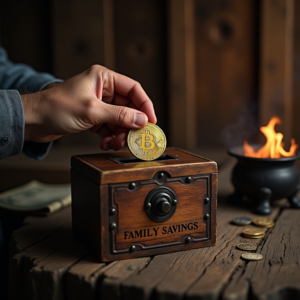
Why Bitcoin Attracts Rebels and Outlaws
Bitcoin is decentralized. No central bank controls it.
The Federal Reserve and Central Banks can’t inflate it, print it, or control its supply.
No company can freeze it if it sits in your own wallet.
That alone makes it dangerous to the existing financial order.
Many also see Bitcoin as digital gold. Its supply is fixed at 21 million coins.
That scarcity is built into its code.
Why Rebels Choose Volatility Over Fed Control
While fiat currencies lose purchasing power year after year, Bitcoin was created to resist inflation by design.
Bitcoin is also global. Anyone with an internet connection can use it.
It does not care who you vote for, where you live, or what bank turned you away.
It runs on math, code, and open networks.
Still, Bitcoin is volatile. It rises fast. It crashes hard.
Rebels accept this because the upside is independence.

The Five Main Apps Rebels Use to Buy Bitcoin
You do not need Wall Street. You only need an on-ramp. These five platforms dominate beginner access in the United States.
Swan Bitcoin
Swan is built specifically for long-term Bitcoin stacking, not gambling on random tokens.
It emphasizes dollar-cost averaging, education, and self-custody.
It is one of the cleanest choices for serious Bitcoin believers.
Start stacking with $10 in free Bitcoin through my Swan link and help this good-ole rebel push back against the system: www.swanbitcoin.com
Cash App
Cash App is one of the fastest ways to buy Bitcoin with a debit card or linked bank.
It also allows easy withdrawals to your own wallet, which is critical.
Many beginners start here because of simplicity.
Turn free fiat into hard money—get $15 on Cash App with this link and buy Bitcoin today: www.cash.app
Coinbase
Coinbase is one of the most common starting points for people buying Bitcoin for the first time.
It’s simple to use, trusted by millions, and fully regulated in the U.S., which makes it feel familiar to beginners.
While it’s not the best place to store large amounts of Bitcoin long-term, it works well for learning the basics and making your first few purchases.
If you want to get started fast, you can use my Coinbase link and get $30 free after your first trade of $20 or more—and I’ll get $30 too, which helps this rebel keep pushing content that challenges the system.
Crypto.com
Crypto.com is a powerful all-in-one app for buying and managing Bitcoin and hundreds of other cryptocurrencies.
It’s built for both beginners and experienced users, with fast purchases, recurring buys, price alerts, and optional debit card features.
Security is strong, with most funds held in cold storage and multiple layers of protection.
It’s a solid choice if you want flexibility beyond just stacking Bitcoin.
If you sign up using my Crypto.com link, you and I can both earn bonus rewards.
You’ll receive $10 in CRO after your first $100 crypto trade, $15 in CRO after depositing and trading $50, and up to $25 more in CRO if you stake CRO or reserve a metal Visa card.
Use this link to get started and support this rebel stand for financial independence: www.crypto.com
Kraken
Kraken is one of the oldest and most trusted Bitcoin exchanges in the world, known for strong security, deep liquidity, and low trading fees.
It’s a favorite for serious Bitcoin users who want full control, advanced trading tools, and reliable withdrawals.
If you sign up through my Kraken link and complete a verified account, you can unlock up to $150 in free bonuses just by trading:
- Deposit at least $100 and trade $100 to earn $15
- Trade $300 to earn $20
- Trade $500 to earn $40
- Trade $5,000 to earn $75
The more you trade, the more you earn — and I earn too, which helps fuel this rebel push for financial independence.
Use this link to activate your bonus and step into the real Bitcoin battlefield:
www.kraken.com
All five platforms allow you to convert dollars into Bitcoin.
But none of them give you real sovereignty until you withdraw your coins into your own wallet.
Exchanges Are the On-Ramp — Not the Final Destination
All five of these platforms — Swan, Cash App, Coinbase, Crypto.com, and Kraken are exchanges.
That means their main job is simple: they turn your dollars into Bitcoin.
They make buying easy, fast, and accessible for beginners and veterans alike.
But here’s the hard truth: an exchange is not where your Bitcoin should live long-term.
Why Self-Custody Is the Rebel Line in the Sand
When your BTC stays on an exchange, you don’t fully control it.
You are trusting a company, their servers, their security, their policies, and whatever government pressure they may face.
Accounts can be frozen. Withdrawals can be paused. Platforms can go down.
History has proven this again and again.
Real sovereignty begins the moment you withdraw your Bitcoin into your own personal wallet — where only you control the private keys.
Until then, you technically own Bitcoin on paper, but you don’t yet control it in practice.
All five platforms can get you into the game — but only self-custody makes you truly independent.

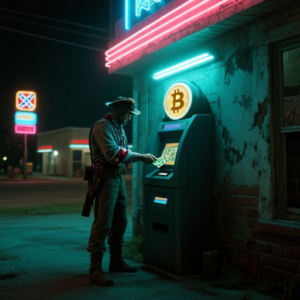
Bitcoin ATMs: The Physical On-Ramp
Bitcoin ATMs exist in gas stations, vape shops, malls, and corner stores.
They allow you to insert cash and receive Bitcoin directly to a wallet address.
They offer privacy and speed. But they come with high fees, sometimes 10–20%.
They are useful when banking rails fail, but they are expensive for stacking long-term.
If you’d rather skip the banks and buy Bitcoin with cash, use CoinFlip to find a nearby Bitcoin ATM and turn paper money into real, self-custodied Bitcoin today.
How Sending and Receiving Bitcoin Actually Works
Bitcoin does not move like dollars. You do not send it to a name or email.
You send it to a wallet address, which is a long string of letters and numbers generated by cryptography.
When you send Bitcoin, it broadcasts to the blockchain. Miners confirm it. Once confirmed, the transaction is irreversible.
There is no chargeback button. There is no dispute department. There is no appeal.
This is both Bitcoin’s greatest strength and its greatest danger.
Private Keys, Wallets, and the Point of No Return
When you move Bitcoin off an exchange and into your own wallet, you cross a line that most people are not emotionally prepared for.
- There is no phone number to call.
- There is no email reset.
- There is no fraud department.
- There is no recovery team.
If you want to hold real Bitcoin you can touch, hide, and pass down outside the system, check out MaterialBitcoin.com for a true offline, self-custody solution built for long-term rebels.
This Is the Price of True Financial Sovereignty
If you lose your private key or recovery phrase, your Bitcoin is gone forever.
A private key is not a password. It is mathematical proof of ownership.
Whoever controls it controls the coins.
Most wallets hide the raw private key and instead give you 12 or 24 recovery words.

Self-Custody Comes With Absolute Responsibility
Those words are your entire wallet.
If someone steals them, your Bitcoin can disappear instantly.
If malware reads them, your savings can vanish overnight.
If you store them online and a platform gets hacked, your wealth may be gone forever.
If you lose those words, there is no rescue.
No Keys, No Freedom — This Is the Rebel Line
The blockchain does not care why you lost access. It only responds to valid cryptographic keys.
This is why the phrase exists: “Not Your Keys, Not Your Crypto”
If your Bitcoin is on an exchange, you do not truly own it.
The company holds the keys. You only hold a promise.
That promise can be frozen, blocked, seized, or lost if the exchange fails.
True ownership begins only when you control the keys.
This is the rebel line in the sand.
Hot Wallets vs Cold Wallets
A hot wallet lives on your phone or computer.
It is convenient.
It is also connected to the internet.
That makes it vulnerable to malware and phishing.
Use your hot wallet like cash in your pocket—only keep what you’re willing to spend.
Your real Bitcoin stays locked in cold storage, and you transfer small amounts over only when needed.
If you’ve heard “not your keys, not your crypto” but never fully understood it, this [deep dive into Bitcoin wallet ownership] connects the dots.
Rebel-Level Security: Why Cold Wallets Matter
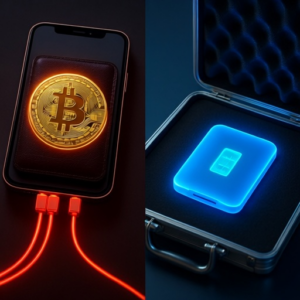
A cold wallet is a hardware device that remains offline.
It is far safer for long-term storage.
Even if your computer is infected, your Bitcoin stays protected—as long as your recovery phrase is secured properly.
Hardware wallets protect Bitcoin from hackers.
They do not protect you from losing your recovery words.
For beginners who want serious cold storage without complexity, I recommend the Swiss-made BitBox02 Bitcoin-only hardware wallet
The Real Risks Rebels Must Respect
Bitcoin offers freedom. It also offers no mercy.
Transactions cannot be reversed.
Scams cannot be undone.
Lost keys cannot be recovered.
You are your own bank. That is power—but it is also responsibility.
How Much Bitcoin Should a Beginner Buy?
Bitcoin does not require you to buy a full coin.
One Bitcoin is divided into 100 million satoshis.
You can start with ten dollars. Five dollars. Even one dollar.
Most seasoned investors recommend keeping crypto as a small percentage of a broader portfolio.
Rebels stack steadily instead of gambling aggressively.
Dollar-cost averaging beats emotional trading.
Taxes Still Exist
Jesus said, “Give unto Caesar what is Caesar’s.” (Matthew 22:21)
Death and taxes are coming whether we like it or not — even for rebels.
In the U.S., Bitcoin is taxed as property.
Selling it, spending it, or trading it can trigger capital gains taxes.
Track your buys. Track your sells. Don’t ignore the IRS just because the system is broken.
Criminals get caught. Rebels survive long enough to win.

Strengths and Weaknesses of Bitcoin
Bitcoin offers independence from central banks, protection against inflation, censorship resistance, and global access.
It also brings high volatility, irreversible mistakes, regulatory battles, and full personal responsibility.
It is not safe money.
It is sovereign money.
Why Rebels Still Choose Bitcoin
Because fiat money quietly robs savers.
Because central banks cannot stop printing.
Because sound money rewards patience, discipline, and building instead of debt and speculation.
Bitcoin does not promise safety. It promises truth in money.
A Simple Rebel Path to Getting Started
- You choose one of the five apps.
- You connect a bank or debit card.
- You buy a small amount of Bitcoin.
- You learn how to send it.
- You move it into your own wallet.
- You secure your recovery phrase offline.
- You never share it.
- You never photograph it.
- You never store it in cloud storage.
That is how rebels survive.

Final Warning Before You Stack
Bitcoin removes middlemen. It removes rescue teams. It removes safety nets.
It replaces them with mathematics, code, and personal responsibility.
If you want permission, comfort, and reversibility—Bitcoin is not for you.
If you want ownership, sovereignty, and resistance—Bitcoin was built for you