
You finally bought some Bitcoin. You pressed the buttons on an exchange like Coinbase or Swan.
Your account now shows a Bitcoin balance.
It feels great. You feel like an owner.
But here is the critical truth.
Beware the Illusion of Ownership:
That exchange account is not a real Bitcoin wallet.
You do not truly control those coins yet.
Understanding this difference is your first step toward true ownership.
It is the foundation of self-reliance and security in the crypto world.
The Path to True Sovereignty:
This guide will explain what a Bitcoin wallet actually is.
We will clearly show why your exchange is different.
You will learn how to take real control. Let us get started.
If you’re brand new and want a simple, no-nonsense walkthrough, this Rebel’s Guide to Buying Bitcoin breaks down everything step by step.
The Debit Card in Your Pocket: A Simple Analogy
Think about the debit card in your physical wallet right now.
That piece of plastic is not actually your money.
You cannot spend the plastic itself. Instead, it is a tool.
This tool gives you access to your money, which is held by your bank.
Decentralized Tools for a Sovereign System:
A Bitcoin wallet works in a very similar way. But there is one massive difference.
A debit card is controlled by a centralized bank. Bitcoin is controlled by no one.
This key change means you need a different kind of tool for access. Your wallet is that tool.
A real Bitcoin wallet does not “hold” coins like a purse holds cash. Nothing physical moves.
Instead, the wallet holds your keys. These keys are the most important part of the entire system.
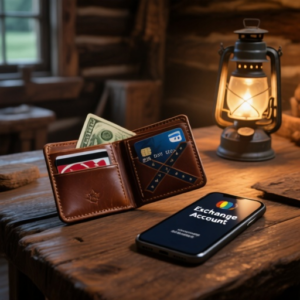
Not Your Keys, Not Your Crypto: The Golden Rule
You will hear this phrase everywhere in Bitcoin. “Not your keys, not your crypto.”
It is not a cute slogan. It is the absolute law of the land.
It means if you do not control the private keys, you do not control the Bitcoin.
Your keys are your proof of ownership.
They are your unique, secret password to your money on the blockchain.
The Sovereignty of Self-Custody:
Whoever has the keys can move the coins. It is that simple.
When you leave your Bitcoin on an exchange, they hold the keys for you.
This is called a custodial arrangement. You trust them to safekeep your keys.
This comes with significant risk.
Digital Sovereignty Demands Personal Control:
History is filled with exchanges freezing accounts, getting hacked, or even collapsing.
Taking control of your keys is the act of moving from a custodian to self-custody.
It is the moment you become your own bank. It is the core of Bitcoin’s promise.

Public Keys and Private Keys: Your Digital Lockbox
Let us break down the technical part simply.
Your Bitcoin wallet manages two crucial pieces of information.
Your Public Address: The Open Door
Public Key (Your Account Number): This is your public Bitcoin address.
You can share this with anyone.
It is like your email address or bank account number.
People use it to send you Bitcoin.
Your Private Key: The Master Secret
Private Key (Your Password): This is your secret number.
It should never be shared with anyone. Ever.
It mathematically proves you own the Bitcoin linked to your public address.
It is the key that signs transactions to spend your coins.
The Master Key Demands a Master Backup:
Your private key is a huge, complicated string of numbers.
It is nearly impossible to remember.
This is where your wallet’s most important feature comes in: the seed phrase.

Your Seed Phrase: The Master Key to Everything
Your wallet takes your complex private key and turns it into a human-readable backup.
This is your recovery phrase, or seed phrase.
It is usually a list of 12 or 24 common words in a specific order.
For example: because hurry anthem bloom garage cliff team eager muscle draft window lottery
Ultimate Access, Ultimate Responsibility:
This list of words is your master key.
Anyone who has these words can access all the Bitcoin in that wallet.
They can do this from anywhere in the world.
Therefore, protecting your seed phrase is the single most important security task.
*Crucial Warning: Your wallet provider or exchange will never, ever ask for your seed phrase. Anyone who does is a scammer trying to steal your funds.

Exchange “Wallet” vs. Real Wallet: The Custody Difference
Now, let’s contrast this with an exchange.
| Feature | Real Bitcoin Wallet (Self-Custody) | Exchange Account (Custodial) |
|---|---|---|
| Who holds keys? | You do. You have the seed phrase. | The exchange holds them. You have a login password. |
| Who controls funds? | You have full control. No one can freeze your account. | The exchange has control. They can freeze withdrawals. |
| Security Risk | You are responsible for securing your seed phrase. | You are vulnerable to exchange hacks, bankruptcy, or government seizure. |
| Ease of Use | Requires more personal responsibility. | Very easy for beginners to buy and sell quickly. |
An exchange is a great place to buy Bitcoin, just like a coin shop is a great place to buy physical gold.
But you would not store your life savings in a coin store’s checkout aisle.
You take it home and put it in your safe.
A real Bitcoin wallet is your personal safe.
A Tour of Real Bitcoin Wallets: Hot and Cold
Real wallets come in different types.
They balance security and convenience.
The main split is between hot wallets and cold wallets.
Hot Wallets (Connected to the Internet)
These are software apps on your devices.
They are convenient for frequent use but are online (“hot”), so they have more attack risk.
- Mobile Wallets: Apps on your phone. Great for small amounts and daily use.
- Examples: Exodus, Edge, BlueWallet
- Desktop Wallets: Programs on your computer.
- Examples: Electrum, Sparrow Wallet
- Web Wallets: Accessed through a browser. (Note: These can be custodial or non-custodial, so check carefully).
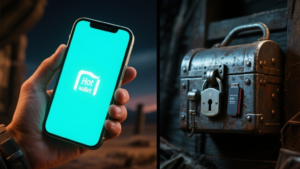
Cold Wallets (Offline)
These are physical devices. They store your keys completely offline.
This makes them the most secure option for storing larger amounts.
They are immune to online hacking attempts.
- How they work: You connect the device to a computer only to sign a transaction. Your private keys never leave the device.
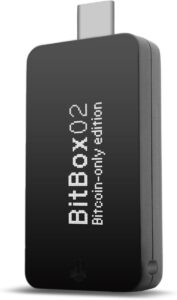
- Examples: Trezor, BitBox02, and Coldcard MK4.
Hot for Spending, Cold for Saving
Think of it like this:
- A hot wallet is the cash in your physical wallet for daily spending.
- A cold wallet is the savings in your bank’s vault.
Your Action Plan: How to Move from Exchange to Safety
Taking self-custody is simple. Follow these steps.
- Choose Your Wallet. For a beginner, a reputable mobile wallet like Exodus is a fantastic start. For larger savings, invest in a hardware wallet like a Trezor.
- Download and Set Up. Only download from the official website or app store. The app will generate your seed phrase.
- Write Down Your Seed Phrase. Use a pen and paper. Do not screenshot it. Do not store it in a text file. Write it down and keep it somewhere very safe.
- Verify Your Backup. Most wallets will ask you to re-enter the words to confirm you wrote them down correctly.
- Find Your Receive Address. In your new wallet, find the option to “Receive” Bitcoin. This will show your public address (a long string of letters/numbers or a QR code).
- Withdraw from Your Exchange. Go to your exchange app (Coinbase, etc.). Start a withdrawal or send. Paste the receive address from your personal wallet. Double-check the address is correct. Confirm the send.
That is it. The Bitcoin will move from the exchange’s control to yours. You have now achieved self-custody.

Embrace True Ownership
A Bitcoin wallet is not a digital purse.
It is a key manager. It is your tool for sovereignty.
Moving your coins off an exchange is not a technical chore.
It is a philosophical shift. You are choosing self-reliance over trusting a third party.
You are choosing to hold your own keys. You are embracing the true power of Bitcoin.
Welcome to being your own bank.