
Most people think a Bitcoin wallet is like a digital purse.
They picture it as a place where coins “sit.”
That idea is wrong. And that misunderstanding is the reason so many people lose their Bitcoin.
The Key to Understanding Bitcoin Ownership
So let’s cut through the confusion and get straight to the truth.
A Bitcoin wallet does not hold your Bitcoin.
It holds your keys. And whoever holds the keys controls the coins.
That one idea explains everything.

If you’re brand new and want a simple, no-nonsense walkthrough, this Rebel’s Guide to Buying Bitcoin breaks down everything step by step.
Why This Question Matters More Than You Think
If you buy Bitcoin on an exchange, it feels like you own it.
You see a balance. You see a dollar value. You feel “in the game.”
But looks can lie.
Because Bitcoin does not work like a bank account.
There is no manager. There is no customer service override. There is no reset button.
There is only math. And the math obeys one rule: Control the keys, control the money.
What a Bitcoin Wallet Actually Is
A Bitcoin wallet is key management software or hardware.
That’s it. It does not store coins.
It stores:
-
A private key
-
Or a recovery phrase that recreates that key
Your Bitcoin itself lives on the blockchain, not in your device.
The wallet simply provides proof that you own specific coins on that public ledger.
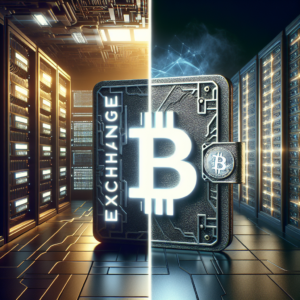
Think of it like this: Your Bitcoin is a safe locked in public view. Your wallet is the only key that opens it.
The Debit Card Illusion
Most people already live with a fake sense of ownership.
Your debit card looks like money access.
But the bank controls:
-
Your account
-
Your permissions
-
Your limits
-
Your withdrawals
If they choose, they can freeze everything.
A Bitcoin wallet flips that structure upside down.
There is no bank in the middle. No approval layer. No supervisor.
Your key either works—or it doesn’t.
The Two Keys That Matter
Every Bitcoin wallet uses two keys:
-
Public key → your receive address
-
Private key → your spending power
The public key is safe to share.
The private key must never be shared. Ever!
Lose These Words, Lose Everything
The private key is a massive string of numbers generated by cryptography.
No human memorizes it.
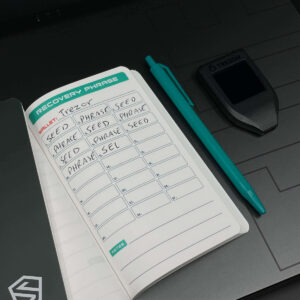
So wallets convert it into a 12 or 24 word recovery phrase.
Those words are your wallet. Not a copy. Not a backup. They are the wallet.
Custodial vs Non-Custodial (The Fork in the Road)
Custodial Wallets (These Are the Exchanges)
Custodial wallets are wallets where a company controls your private keys — not you.
These are almost always crypto exchanges, including:
You can click any of the above to earn a signup reward — they are affiliate links that help this rebel keep fighting the system.
When you use these platforms, you log in with:
- Password
- Two-Factor Authentication (2FA)
It feels just like a bank app. That’s the trap.
Because behind the scenes, you don’t actually control your Bitcoin.
Custody Is Control — And It Isn’t Yours
The company holds the keys. You hold a permission slip.
They can freeze your account. They can block withdrawals. They can lock you out without warning.
And if they fail, your Bitcoin can disappear with them.
This is not ownership. This is financial permission.
Non-Custodial Wallets
These give you control of the keys.
No company can:
-
Freeze you
-
Stop you
-
Seize funds
-
Lock withdrawals
If you control the keys, you control the money. This is the entire point of Bitcoin.

Hot Wallets vs Cold Wallets (Online vs Offline)
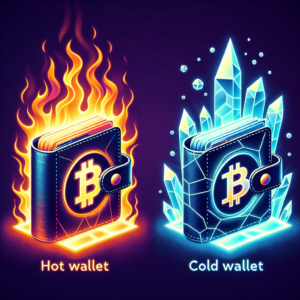
Bitcoin wallets fall into two main security classes.
Hot Wallets
-
Connected to the internet
-
Easy to use
-
Good for spending
-
Higher risk
Examples:
Cold Wallets
-
Stay offline
-
Designed for savings
-
Extremely secure
-
Not convenient for daily use
Examples:
Hot wallets = your pocket.
Cold wallets = your vault.
The Recovery Phrase Is the Point of No Return
Let’s be very clear.
If you lose your recovery words, your Bitcoin is gone forever.
There is:
-
No phone number
-
No email reset
-
No tech support
-
No fraud department
-
No insurance rescue
The blockchain does not care why you lost access. It only responds to valid keys.
This is why the saying exists: “Not your keys, not your crypto.”

The Exchange Illusion (Why It Feels Like Ownership)
Exchanges make things feel safe.
They look like banks. They send emails. They have apps. They show your balance.
But here is the truth:
If your Bitcoin stays on an exchange:
-
You do not own it
-
The company does
-
You only have permission to ask for it
And permissions can be revoked. History proves that. Over and over.

Why People Still Start With Exchanges
Because exchanges are on-ramps.
They convert:
-
Dollars → Bitcoin
That is their job. That is all they are meant to do.
And for beginners, they are often the easiest first step.
Your First Act of Financial Rebellion Starts Here
One of the cleanest ways to start stacking is Swan Bitcoin.
It focuses only on Bitcoin.
No gambling tokens. No distractions. No leverage traps.
If you want to start slow and steady, you can get $10 in free Bitcoin through my Swan link:
👉 https://www.swanbitcoin.com/Bayou/
That gets you into real Bitcoin, and it helps me keep pushing back against broken money systems.
Once you buy, your next move matters more than the buy.
Why Withdrawal Is the Moment That Ownership Begins
Buying Bitcoin is step one. Withdrawing to your own wallet is step two.
Until you withdraw, your Bitcoin is:
-
Custodial
-
Permission-based
-
Seizable
-
Freezable
Once you withdraw, your Bitcoin becomes:
-
Self-custodied
-
Independent
-
Censorship-resistant
-
Truly yours
This is not ideology. This is how the protocol works.
How a Wallet Sends and Receives Bitcoin
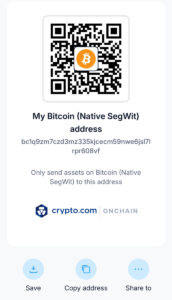
You don’t send Bitcoin to a person. You send it to an address.
That address is created by your wallet.
When you send:
-
You paste the address
-
You choose an amount
-
You confirm
-
Miners verify
-
The transaction becomes permanent
There are:
-
No chargebacks
-
No reversals
-
No dispute forms
This is both power and danger.
Why Beginners Lose Bitcoin
Almost every loss falls into one of these buckets:
-
Phishing scams
-
Fake apps
-
Cloud-stored recovery phrases
-
Screenshot backups
-
“Support” impersonators
-
Exchange collapses
Bitcoin does not forgive mistakes. That is the price of sovereignty.
The Cloud Backup Trap
Some wallets offer cloud backups.
That sounds convenient.
It is also dangerous.
Because now your private financial power sits on:
-
Google servers
-
Apple servers
-
Third-party infrastructure
And any breach becomes an instant drain.
Paper beats cloud for critical keys. Metal beats paper for fire.
A Simple Wallet Structure for Beginners
Here is the cleanest structure for new users:
-
Cold wallet for savings
-
Hot wallet for spending
-
Exchange only as a bridge
Flow:
Exchange → Cold Wallet → Hot Wallet (as needed)
Never store long-term savings online.
If you want to hold real Bitcoin you can touch, hide, and pass down outside the system, check out MaterialBitcoin.com for a true offline, self-custody solution built for long-term rebels.

The Psychology of True Ownership
Most people say they want freedom. Very few want responsibility.
Bitcoin gives both. If you want someone to:
-
Reverse mistakes
-
Call you
-
Fix errors
-
Bail you out
Then Bitcoin will feel harsh.
If you want control, final authority, and no permission layers Bitcoin fits you.
Why This Matters More in the Years Ahead
Money is becoming:
-
More digital
-
More tracked
-
More restricted
-
More programmable
Bitcoin moves in the opposite direction.
It is:
-
Permissionless
-
Borderless
-
Seizure-resistant
-
Supply-locked
But those advantages only work if you self-custody.

The Rebel Line in the Sand
Here is the hard line.
If you do not control your keys:
-
You trust companies
-
You accept freezes
-
You accept seizures
-
You accept permission
If you control your keys:
-
You answer to no one
-
You own your time
-
You own your labor
-
You own your future
This is the real meaning of a Bitcoin wallet.
Final Clarity: What a Wallet Really Is
A Bitcoin wallet is not:
-
A purse
-
A bank
-
A vault full of coins
A Bitcoin wallet is a key that proves you control digital property. Everything else is noise.
A Simple Rebel Path Forward
-
Learn what a wallet is
-
Buy small amounts
-
Withdraw immediately
-
Secure recovery words offline
-
Use hot wallets only for daily use
-
Never trust convenience with your life savings
That is the path of sovereign money.

Final Warning Before You Stack
Bitcoin removes middlemen. It removes rescues. It removes undo buttons.
It replaces all of that with:
-
Math
-
Finality
-
Responsibility
If that scares you, slow down. If that excites you, you’re ready to learn