
You see the price of a single Bitcoin. It’s a big, intimidating number.
You think, “I can’t afford that.”
This is the single biggest mental barrier stopping people from entering the Bitcoin ecosystem.
But it’s based on a misunderstanding.
You do not need to buy a whole Bitcoin. In fact, very few people ever do.
The real building block of Bitcoin ownership is not a full Bitcoin.
It is the satoshi.
In this post, you’ll learn what a satoshi is, why it matters, and how thinking in sats makes Bitcoin practical for normal people.
Forget the scary price tag. It’s time to think in sats.

If you’re brand new and want a simple, no-nonsense walkthrough, this Rebel’s Guide to Buying Bitcoin breaks down everything step by step.
The Penny of Bitcoin: Defining the Satoshi
Just like a dollar is divided into 100 cents, a single Bitcoin is divisible into 100,000,000 units.
Each unit is called a satoshi (or sat for short).
-
1 Bitcoin (BTC) = 100,000,000 satoshis (sats)
-
1 satoshi = 0.00000001 BTC
This extreme divisibility was not an afterthought. It was part of Bitcoin’s original design.
The early community chose the name “satoshi” to honor Bitcoin’s creator, Satoshi Nakamoto.
Here’s why it matters:
- If 1 Bitcoin ever reached $1,000,000, then 1 satoshi would equal about one cent.
- That means Bitcoin can scale to global use, even if the price rises dramatically.
Why Divisibility Is a Revolutionary Feature
To understand why sats matter, you need to understand what’s wrong with traditional money.
Governments and central banks control national currencies. They can print more whenever they want.
That printing is called inflation, and it quietly erodes the value of the money you already hold.
Bitcoin is the opposite. Its supply is capped at 21 million coins. No one can create more. No one can “dilute” it.
That scarcity is the point. But here’s the catch:
A fixed supply of 21 million coins would be useless for a global economy if the units couldn’t be divided.
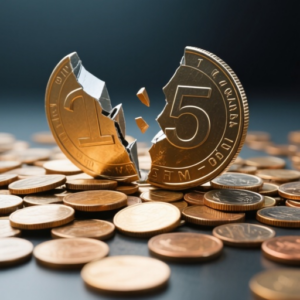
Satoshis solve that. Bitcoin’s true supply is really a fixed supply of 2.1 quadrillion sats.
That ocean of tiny units is what makes Bitcoin usable for everyday life—without needing everyone to own a whole coin.
Stacking Sats: The Path to Financial Sovereignty
Here’s the phrase you need to learn: Stacking sats.
It simply means buying small amounts of Bitcoin consistently.
Instead of obsessing over the price of a whole Bitcoin, you focus on accumulating satoshis.
This mindset shift changes everything.
Why stacking sats is a smart strategy
Accessibility: Anyone can start small. You can buy $10 or $20 worth.
Dollar-cost averaging (DCA): If you buy the same dollar amount regularly, you automatically buy more sats when price is low and fewer when price is high.
Psychological momentum: “I stacked 50,000 sats this week” feels doable. “I need thousands for a whole coin” feels impossible.
When you think in sats, Bitcoin stops feeling like a rich person’s game.
It becomes a long-term savings tool.
A tool that makes this easy is Swan Bitcoin, which is built specifically for automatic recurring purchases.
It helps you stack consistently without emotions getting in the way.

From Pizza to Parity: A Story in Sats
Bitcoin Pizza Day is the most famous “lesson” in Bitcoin history.
In 2010, Laszlo Hanyecz paid 10,000 BTC for two pizzas.
Now look at it in sats:
-
10,000 BTC = 1,000,000,000 sats
At the time, those sats were worth around $41. Today, those same sats are worth vastly more.
People say, “He bought the most expensive pizzas ever.” But that misses the point.
This story is proof that value can grow inside a fixed, divisible money system.
Each satoshi started tiny. Over time, it became meaningful.

Sats in Action: More Than Just Investing
Satoshis aren’t just for saving.
They’re the unit that makes Bitcoin usable.
1) Everyday payments
As Bitcoin’s price rises, quoting prices in BTC gets awkward.
A coffee priced at 10,000 sats is easier to understand than 0.00025 BTC.
That’s why many Bitcoin-friendly businesses price things in sats.
2) The Lightning Network
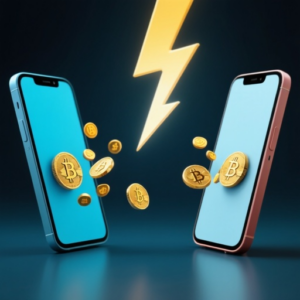
Lightning is a second-layer payment system on top of Bitcoin.
It enables instant, near-free payments.
On Lightning, you can send tiny amounts—sometimes even fractions of a sat—for things like tips, streaming, or pay-per-article content.
This is where sats act like true digital cash.
3) Transaction fees
On the base layer, Bitcoin fees are commonly measured in sats per byte.
So the more you understand sats, the more you understand what you’re paying—and how to avoid overpaying.
How to Start Stacking Sats Today
Ready to start? Keep it simple.
Step 1: Choose a platform
Pick a reputable service that supports small purchases.
Examples include Cash App, Coinbase, or Swan Bitcoin.
Step 2: Set recurring buys
This is the most effective method.
Set up an automatic purchase of $10, $50, or $100 weekly or monthly.
Put your sats on autopilot.
Step 3: Withdraw to your own wallet
Don’t leave your sats on an exchange forever.
Once you’ve stacked a meaningful amount, move it to a non-custodial wallet you control.
That’s where the rule becomes real:
Not your keys, not your crypto.

If you’ve heard “not your keys, not your crypto” but never fully understood it, this [deep dive into Bitcoin wallet ownership] connects the dots.
Sats vs. Bits: Clearing Up the Confusion
You might hear the term “bits.”
A bit equals 100 sats (0.000001 BTC).
It was suggested as a user-friendly unit years ago.
But sats won the culture war.
Most of the Bitcoin world uses sats now, because it’s simple and universal.
Your New Mindset: Think in Sats
The shift from: “I can’t afford a Bitcoin” to “I can stack sats today”
is the most important mental move you can make.
Satoshis make Bitcoin accessible to normal people, not just the wealthy.
Set a goal:
-
100,000 sats
-
1,000,000 sats (0.01 BTC)
-
5,000,000 sats
Whatever fits your budget.
Every sat you own is a piece of a decentralized, finite monetary network.
In a world of endless money printing, that matters.
Stop staring at the price of one full Bitcoin.
Start focusing on how many sats you can stack this week.
Your future self will thank you.